The Turkish Ministry of Health runs a public portal listing approved private hair transplant centres. It is free, needs no login, works in nine languages including English, German, Arabic and Russian, and takes about two minutes to use. It is the single most useful thing you can do before paying a deposit, and almost nobody does it — partly because clinics do not mention it.
How to search it
- Step 1Open sacekimmerkezi.saglik.gov.tr
The page is titled "Onaylı Özel Saç Ekim Merkezleri Listesi" — the list of approved private hair transplant centres. It loads the full list immediately; you do not need an account.
- Step 2Switch the language
A language selector at the top offers Turkish, English, German, French, Italian, Spanish, Dutch, Russian and Arabic. The facility names stay in Turkish because those are their registered legal names; the interface changes.
- Step 3Filter by province, then district
Two dropdowns — İller (provinces) and İlçeler (districts). Choose İSTANBUL and then the district your clinic is in, if you know it. This is the fastest route if you have the address.
- Step 4Or type into the search box
The box marked Arama searches the list by name. Type part of the facility name rather than the whole thing — registered names are long and the spelling on the register may not match the spelling in a brochure.
- Step 5Read the entry
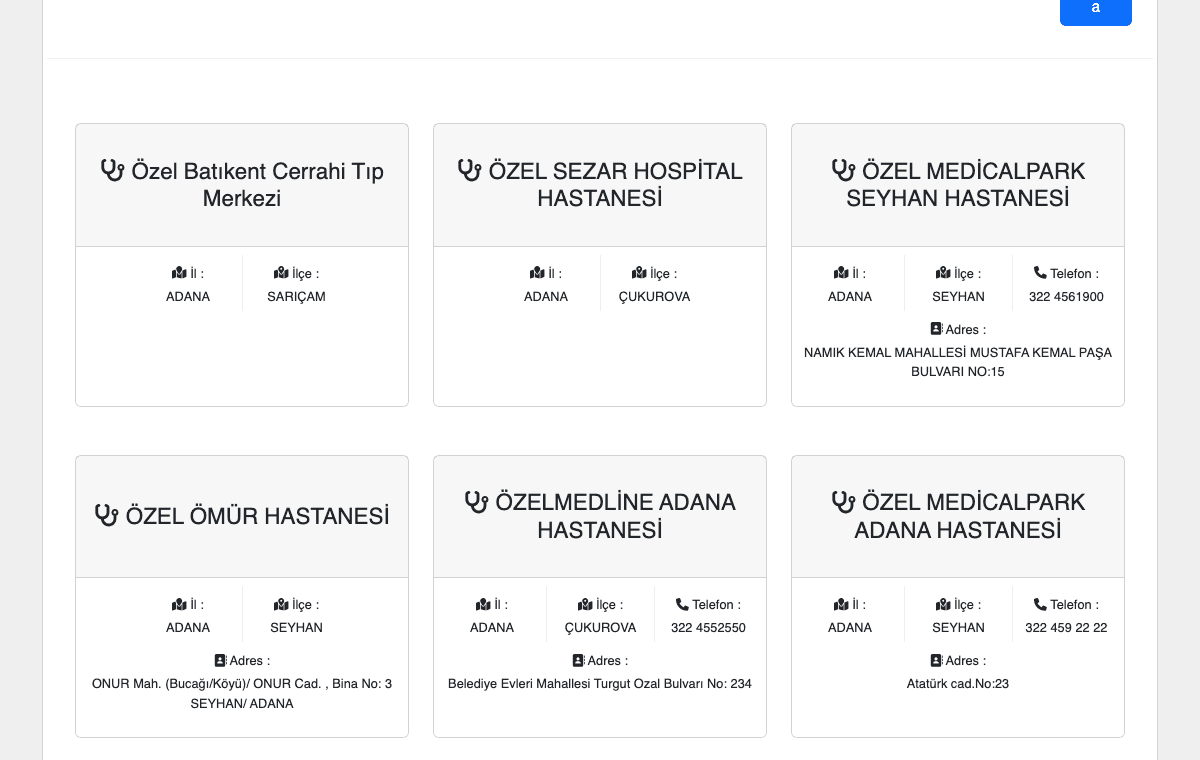
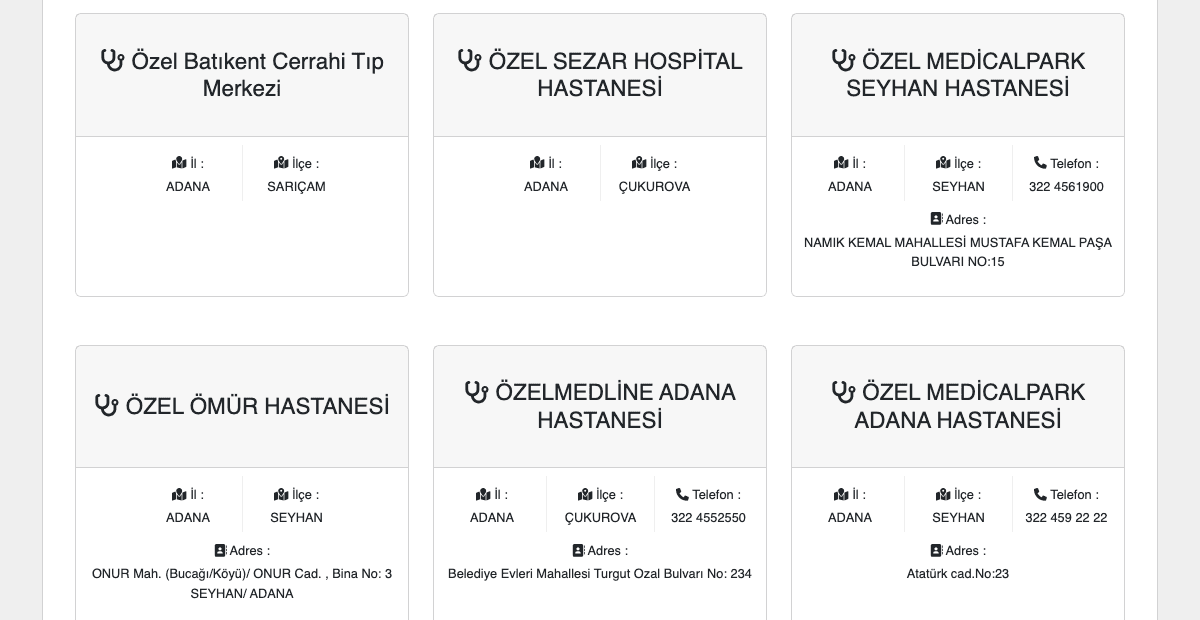
Each result gives the facility name, province and district, and often a telephone number and street address. Compare the address to the one where you are actually being asked to attend. A registered facility at a different address from the clinic you booked is a question, not an answer.
The name on the register is usually not the brand
This is the part that confuses people and the part that is most worth understanding. The register lists licensed medical facilities under their registered names — hospitals, medical centres and polyclinics, in forms like "ÖZEL … HASTANESİ", "ÖZEL … TIP MERKEZİ" or "ÖZEL … POLİKLİNİĞİ". The brand you found through an advertisement is often not one of those.
That does not automatically mean the brand is unlicensed. Many hair transplant brands operate inside a licensed hospital or polyclinic, and that arrangement is legal and normal. But it does mean your search will frequently come back empty, and an empty result is where the real question starts rather than ends.
So ask the clinic directly: under which registered facility do you operate, and at which address? A legitimate operation answers this immediately, because it is a routine question with a routine answer. Then search the register for that name and confirm the address matches where they want you to come.
What the register does and does not prove
It proves the facility is authorised by the Ministry of Health to provide hair transplantation. That is a real and meaningful bar: it means an inspected premises, a licence that can be withdrawn, and a legal entity that can be held responsible.
It does not tell you who will hold the punch. Registration is about the facility, not about which member of staff performs which step, and the most common complaint about Turkish hair transplants is not that the premises were unlicensed but that a technician did work a surgeon should have done. The register cannot answer that; only asking the clinic can, and their willingness to answer is itself information.
It also does not measure quality. A registered facility can still produce a bad result, and registration says nothing about hairline design, graft survival or how many patients a clinic runs through in a day. It is a floor, not a ranking.
Three more checks that cost you nothing
Check the surgeon, not just the building. Ask for the operating doctor's full name and their Turkish medical registration, then look them up. A clinic that will not name the doctor who will operate before you pay has told you something about how the day will go.
Check that the address on the register, the address on the website and the address in the appointment message are the same place. Divergence here is common in operations that subcontract the surgery to whichever facility has capacity that week, and it means you cannot know in advance where you will be treated.
Check the register again close to the date. Authorisations are withdrawn as well as granted, and a name that was on the list when you booked six weeks ago is not guaranteed to be on it when you fly.
What this page cannot tell you
It cannot tell you whether a particular clinic is good. Registration is a minimum condition, not a recommendation, and this site does not rank clinics by surgical quality because no public data source measures it.
It also cannot keep up with the register in real time. The Ministry's portal is the authority; anything shown on this site is a copy of what it said when we last checked, and the check date is printed on each clinic profile for exactly that reason.
Frequently asked questions
Where can I check if a Turkish hair transplant clinic is licensed?
On the Ministry of Health's own portal at sacekimmerkezi.saglik.gov.tr, which lists approved private hair transplant centres. It is free, needs no account, and works in nine languages including English, German, Arabic and Russian. Filter by province and district, or search by name.
The clinic I booked is not on the register. Does that mean it is illegal?
Not necessarily. The register lists licensed facilities under their registered legal names — hospitals, medical centres and polyclinics — and many hair transplant brands operate inside one of those under a different trading name. Ask the clinic which registered facility they operate under and at which address, then search for that name. What is not acceptable is a clinic that will not answer the question.
Does being on the register mean the clinic is good?
No. It means the facility is authorised, inspected and legally accountable, which is a real floor but not a ranking. It says nothing about hairline design, graft survival, or how many patients are operated on per day, and it does not tell you whether a doctor or a technician will perform each step.
Does the register say who will perform my surgery?
No, and this is its main limitation. Registration covers the facility, not the division of labour inside it. The most common complaint about Turkish hair transplants is that technicians performed work a surgeon should have done — ask the clinic directly which steps the doctor performs personally, and treat a vague answer as an answer.
Is the portal available in English?
Yes. It offers Turkish, English, German, French, Italian, Spanish, Dutch, Russian and Arabic. The facility names stay in Turkish because those are their registered legal names, but the interface and labels change with the language.